
Learning how to start a franchise can be a great way to become a business owner. To launch a business,…
Key Takeaways
- Franchise costs range widely. A home-based franchise starts at around $10,000, while a McDonald’s franchise ranges from $1.47 million to $2.73 million per its 2026 FDD.
- Every franchisor must provide a Franchise Disclosure Document (FDD). Use it to compare key factors such as fee structures and available support and financing across brands.
- Marketing is critical from day one. Brand awareness gets customers searching, but the franchise location with the strongest local marketing presence wins.
- Local SEO and geo-targeted paid ads are the two highest-ROI channels for new franchisees, closely followed by social media that stays within brand guidelines.
- Franchise earnings vary widely. Franchisees in the food and beverage space can earn anywhere from under $50,000 to over $250,000.
Learning how to start a franchise can be a great way to become a business owner. To launch a business, you need to perform market research, file for a license, create a marketing plan, and build your brand. Buying a franchise location within a corporation that’s already taken all those steps is one way to shorten that learning curve.
Becoming a franchise business owner also enables you to tap into a large brand’s resources and branding, but that doesn’t mean you should leave the marketing completely up to them.
Savvy entrepreneurs who start a franchise business understand the importance of taking all the right steps from start to finish. That’s exactly what I’m here to show you in this guide.
We’ll cover the basics, like how to start a franchise and the initial costs. Then we’ll move on to the engine that makes your franchise a success: learning how to market it once it’s open.
How Does a Franchise Business Work?
In a franchise business, a franchise owner pays a fee to essentially “rent” a brand name. The franchisee runs the business themselves (or hires someone to do so) and must follow the rules and regulations governing brand use.
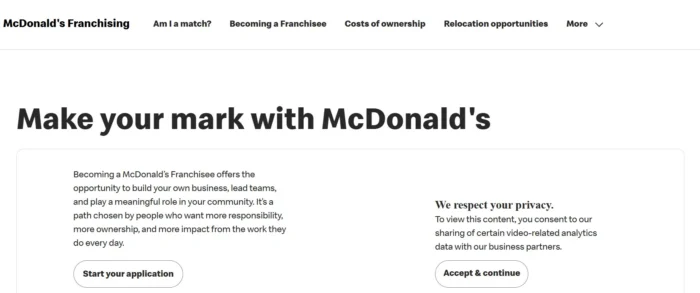
For example, many McDonald’s restaurants are franchises, meaning an owner (or group of owners, in some cases) pays McDonald’s to use their brand name, menus, logos, and other business assets.
They run their location, pay McDonald’s to use the name, and keep the remaining profits.
A franchise business is a popular business model because it offers owners the best of both worlds: the support of a large brand and the benefits of owning a business.
A few businesses that offer franchising options include:
- 7-Eleven
- Taco Bell
- Great Clips
- Ace Hardware
Starting a franchise business should not be taken lightly. There are pros and cons to consider before deciding whether to become a franchisee.
Benefits of Starting a Franchise Business
Starting a business gives you more control over your life and income. Unlike starting your own business, however, buying into a franchise offers specific benefits.
More Support
Starting a franchise business is sort of like playing video games on easy mode. The franchisor offers support through training, materials, process flows, and branding to help you get your business off the ground.
For example, starting a taco shop could require months of menu development, taste testing, logo design, and product sourcing. As a Taco Bell franchise owner, however, much of that work is already completed.
Lower Failure Rate
Franchise businesses may offer you a better chance of success than going it alone. When you buy into a franchise, you join a proven business model that works. You also have additional support and business resources that can make a difference in your success.
Built-In Brand Awareness
Building a brand is one of the best things you can do for your business. However, it often takes time and resources.
When you buy into a franchise, the branding is already complete. People already know who your brand is and what it represents. This saves you time and creates a built-in customer base you can tap into.
Better Buying Power
In some cases, you may purchase goods at a lower rate. Many franchisors negotiate contracts with vendors for the entire network, allowing you to spend less on goods and services by purchasing in bulk. However, the flip side of these benefits is that you may not be able to choose your vendors, and costs may be higher.
Drawbacks of Owning a Franchise
While there are many benefits to starting a franchise business, there are some drawbacks to keep in mind. You’ll pay licensing fees to corporations, which can eat into profits. You’ll also have less control over some aspects of your business. For example, if you own a franchise restaurant, you may have little to say on the menu or which vendors you use.
How to Start a Franchise Business: 7 Steps
Now that you understand the pros and cons, the next question is: how do you start a franchise business? This seven-step plan will walk you through everything you need to know.
1. Identify a Business Opportunity
The first step in starting a franchise business is choosing a franchise to invest in. Hundreds of companies offer franchise opportunities: which one is right for you?
Here are a few questions to ask yourself:
- Do you want an online or in-person business?
- What industry are you interested in? There are franchise businesses in travel, restaurants, convenience stores, websites, health and wellness, business, and much more.
- How much money do you have to invest? Before selecting a business, consider the cost.
Once you answer those questions, start looking for franchise opportunities. For example, if I am interested in a restaurant franchise and like sports bars, I might Google “best sports bar franchises.”